
Quick answer: Choose a complete skateboard or a solid blank deck that feels stable under your feet, matches how and where you want to skate, and leaves room to learn—not a novelty board that fights you on every push.
Buying your first skateboard as an adult does not have to feel like a secret code. You need a board that rolls smoothly, fits your body and terrain, and is safe enough that you actually want to come back tomorrow. Keep Pushing starts with gear that helps you practice, not gear that looks cool in a photo and fails in a driveway.
What “first skateboard” really means
Most adult beginners want one reliable setup for flat ground, smooth paths, and gentle park features—not a specialised race board or a tiny trick board meant for someone who already skates daily. A good first board usually includes:
- A sturdy maple deck (often a classic popsicle shape or a twin-tail style)
- Trucks that match the deck width
- Wheels suited to the surface you skate most
- Bearings that spin freely
- Grip tape and hardware installed correctly
You can buy a complete or build from a blank deck. Either path works if the parts fit together and the quality is real—not a toy-store special with soft plastic wheels.

Start with how and where you will skate
Before you obsess over graphics, answer three practical questions:
- Surface: Mostly smooth pavement and paths, or rougher streets and park concrete?
- Style goal: Cruising and balance first, or learning ollies and park basics soon?
- Session length: Short after-work sessions, or longer weekend rolls?
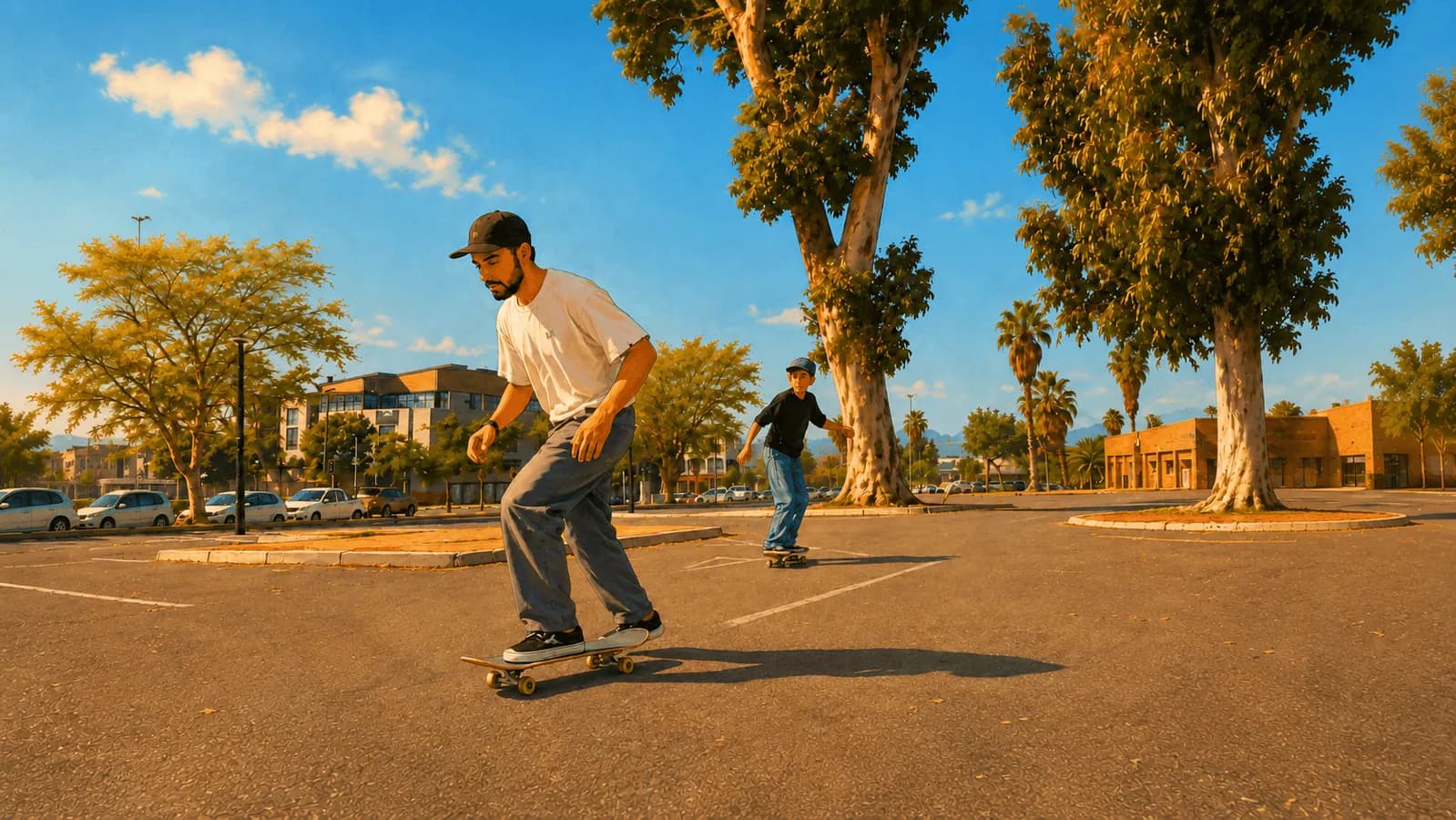
Adult beginners often progress faster on a slightly more stable deck with wheels that handle imperfect ground. If you are returning after years away, that same “stable and forgiving” mindset usually beats chasing the lightest, most aggressive setup.
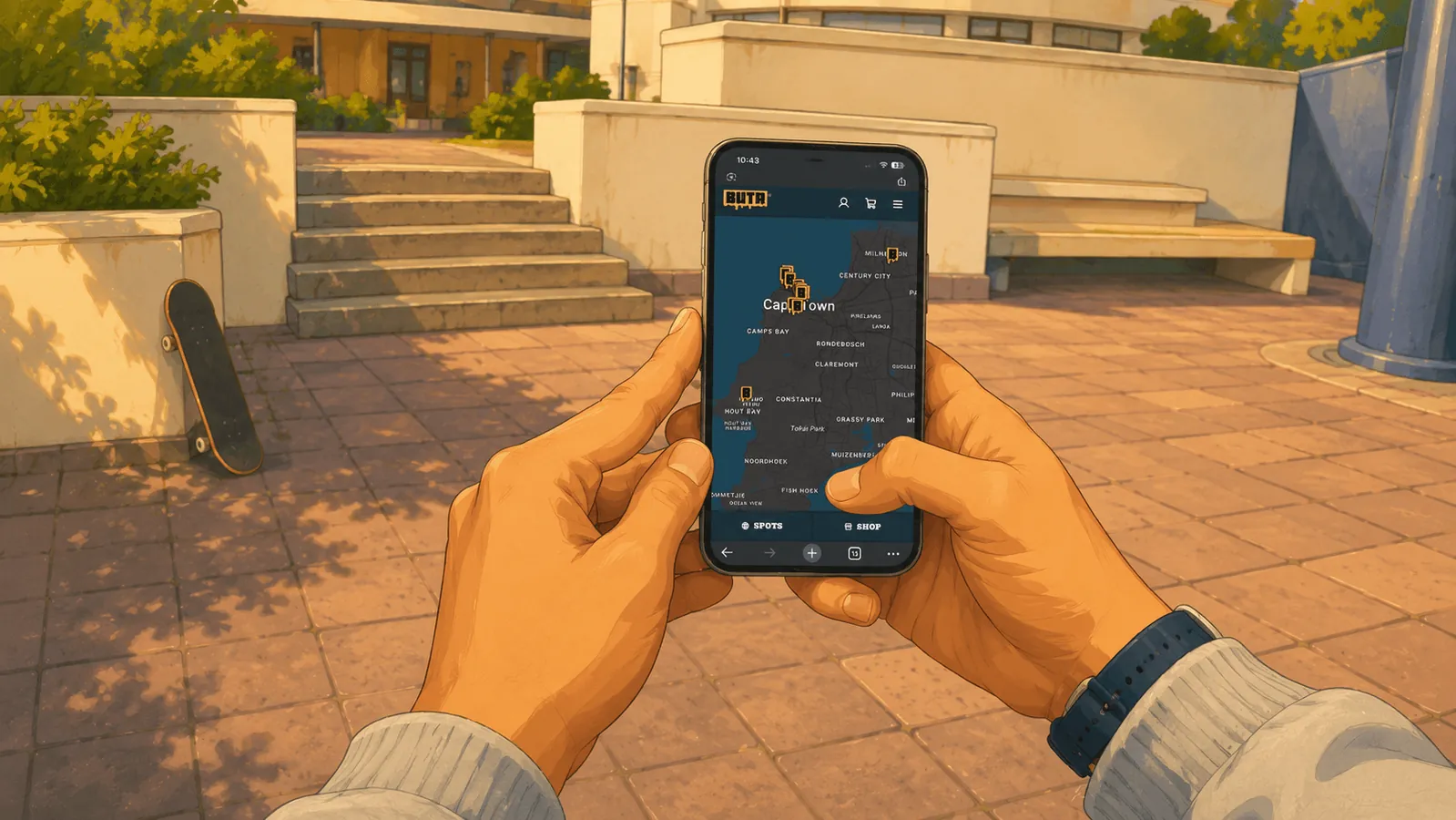
When you are ready to practice outdoors, a clear spot matters as much as the board. Use BUTR Spots to find public places that fit your pace, and read our guide to finding skate spots near you.
Deck shape: popsicle vs twin tail for beginners
Two shapes show up often for adult beginners:
- Popsicle: Symmetrical street-style outline with kicktails. Familiar, versatile, and a strong default if you want one board that can grow with flat-ground skills and park basics.
- Twin Tail: Also rideable both ways with useful kick space. A solid option if you like a confident, progressive feel as you learn turns, manuals, and simple tricks.
BUTR blank decks in Popsicle and Twin Tail are built for skaters who want a clean canvas without paying for hype graphics. Graphics do not make you learn faster. Fit and construction do.
Deck width: a simple adult-beginner range
Width is the size decision that changes how the board feels under your feet. For many adult beginners:
- Around 8.0–8.25": Lighter and quicker to flick once you have balance—great if you already feel coordinated and skate mostly smooth ground.
- Around 8.25–8.375": A popular “middle” zone for mixed street/park learning.
- Around 8.5" and up: More platform and stability, often preferred for transition, bigger shoes, or anyone who wants a calmer first month.
Shoe size is a clue, not a law. Larger feet often prefer a wider deck for comfort. If you feel tippy the moment you stand on the board, try a slightly wider option before blaming yourself.

Trucks, wheels, and bearings without the jargon trap
- Trucks: Should roughly match deck width so wheels do not stick out wildly or sit too far inside. They should turn when you lean, without feeling floppy.
- Wheels: Softer, slightly larger wheels usually feel friendlier on imperfect pavement. Hard, tiny wheels can chatter and make early sessions frustrating.
- Bearings: Clean bearings that spin freely matter more than chasing a badge number. If the wheels drag, learning to push is miserable.
If you buy a complete from a trusted skate brand or shop, these parts are usually matched for you. If you build from a blank deck, ask the shop (or check product specs) to confirm trucks and wheels fit that deck.
Complete board vs blank deck
Complete: Fastest path if you want to roll today and avoid parts puzzles. Check that it is a real skate complete—not a department-store board with soft plastic trucks.
Blank deck + parts: Smart if you want quality wood without paying for a full graphic package, or if you already have trucks/wheels you trust. BUTR blanks are aimed at skaters who Keep Pushing with practical tools, not disposable gear.

Shoes, helmet, and pads still count as “setup”
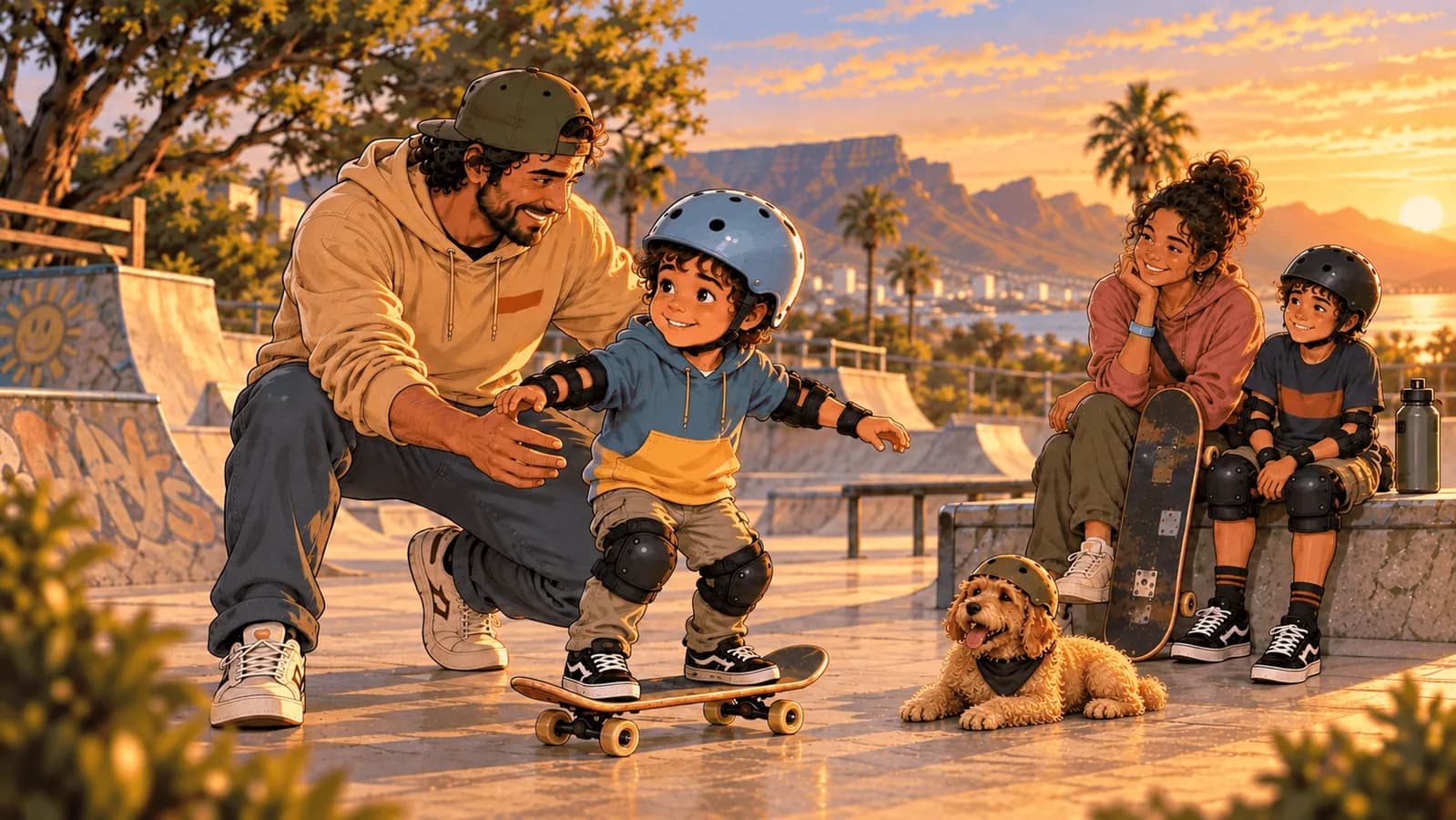
Flat, grippy skate shoes (or sturdy sneakers with good sole grip) beat slick fashion soles. A properly fitted helmet is non-negotiable for most adult beginners—especially if you are returning, skating with kids nearby, or learning at a park. Wrist, knee, and elbow pads reduce scrapes while you rebuild balance. Gear that keeps you skating next week is better than bravado.
A simple first-board checklist
- Confirm the deck width feels stable when you stand over the bolts.
- Spin the wheels; they should roll freely without grinding noises.
- Check that trucks turn smoothly and hardware is tight.
- Make sure grip tape has coverage and no huge peeling edges.
- Plan your first sessions on flat, smooth ground away from traffic.
Common beginner buying mistakes
- Choosing the cheapest toy-aisle board “just to try” (it often teaches bad habits and breaks confidence)
- Buying ultra-narrow or ultra-soft setups because a friend rides them
- Ignoring wheel choice for rough local surfaces
- Skipping a helmet because “I am only rolling slowly”
- Waiting for the perfect graphic instead of starting practice
After you buy: make the first week count
Spend early sessions on standing, pushing, gentle turning, and comfortable stopping—not on filming tricks. If you are coming back after a long break, our guide on returning to skateboarding pairs well with a patient first-board approach. Warm up before you push hard—see how to warm up before skateboarding.
Keep sessions short enough that you leave wanting more. That is how progress sticks.
Ready to choose?
If you want a clean, progressive blank to build on, explore BUTR Popsicle and Twin Tail decks, then match trucks and wheels to where you actually skate. Your first board should invite practice. Keep Pushing.
What size or setup are you leaning toward for your first (or next) board—and what surface will you skate most? Tell us below.