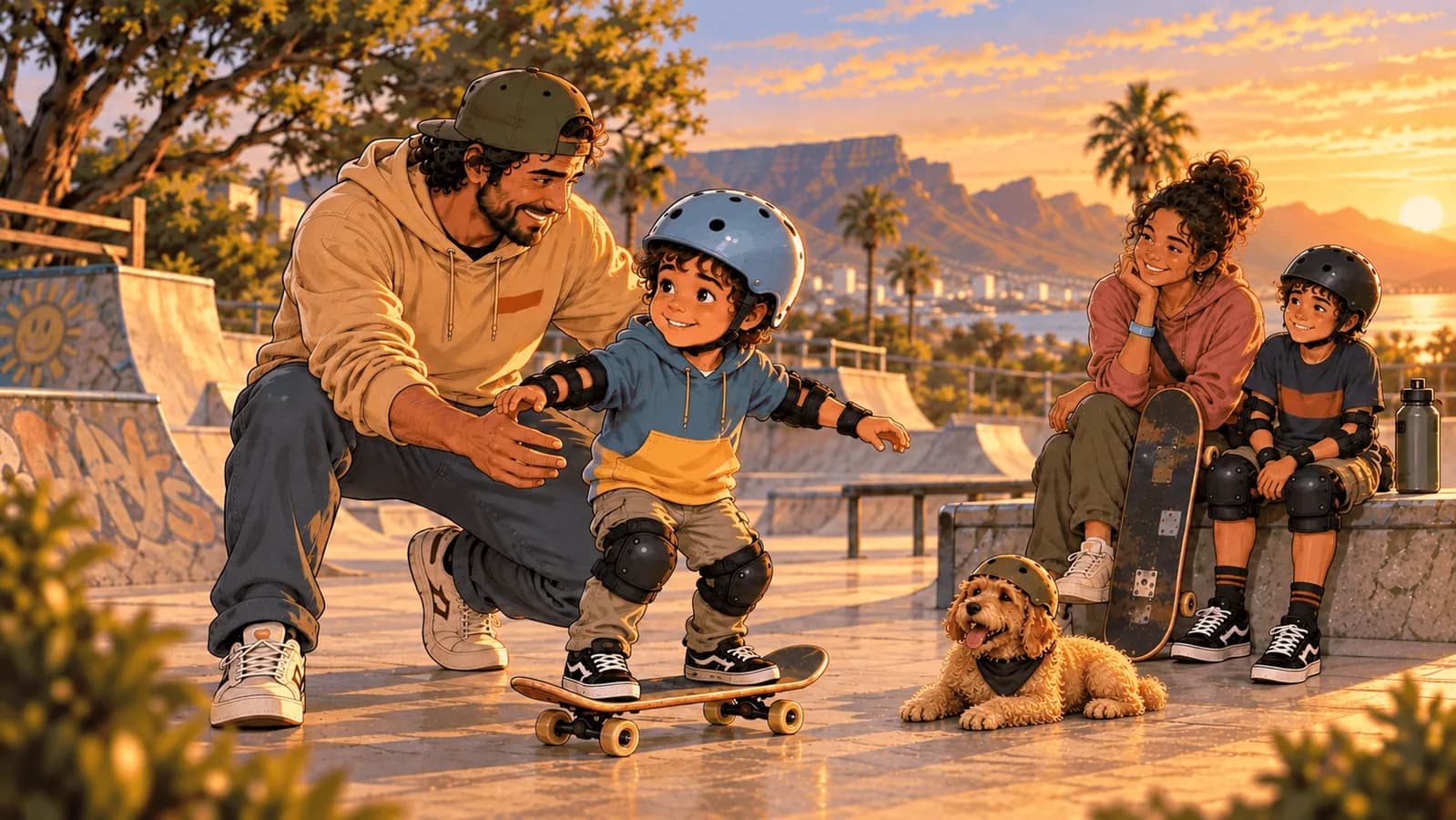

Quick answer: Learn to push with a stable stance, short controlled pushes, and eyes forward—then practice a calm foot brake or step-off stop on flat ground before you add speed.
Pushing and stopping are the skills that make every other skate session possible. Adult beginners and returners often rush toward tricks and skip the boring-looking fundamentals. Those fundamentals are what keep you rolling confidently in real spots—driveways, paths, and quiet park flats.
Set your stance before you push
Stand on the board with your front foot across the bolts (roughly pointing a bit toward the nose) and your back foot ready to push on the ground. Soft knees beat locked legs. Keep your shoulders relaxed and look where you want to go—not straight down at the grip tape.
If you are unsure which foot leads, try a gentle push with each stance on carpet or grass first (board still). Most people feel more stable with one option. You can refine later; starting is more important than perfection.

How to push on a skateboard (beginner sequence)
- Place your front foot over the front bolts.
- Keep a little bend in that front knee.
- Push the ground with your back foot in short, controlled strokes—not giant lunges.
- Bring the back foot onto the board behind the back bolts once you have a little roll.
- Ride the coast with soft knees, then repeat.
Early sessions: fewer pushes, more balance. Speed can wait. A clean push that you can repeat is better than one big shove that sends you into a panic.
Mongo note: Pushing with your front foot (mongo) can feel natural at first. If you notice it, gently correct toward pushing with the back foot when you can—it usually pays off for balance and later tricks. Do not shame yourself; just keep pushing with cleaner form when ready.

How to stop on a skateboard (two beginner options)
Practice stopping on flat, open ground with space. Helmets help confidence while you learn.
1) Foot brake (most useful first stop)
- Ride at a slow, comfortable speed.
- Keep your front foot planted and balanced.
- Drag the sole of your back foot lightly on the ground beside the board—pressure increases as you slow.
- Stay tall enough to see ahead; do not lean back hard.
Think “gentle sandpaper,” not stomp. Too much drag too soon can make the board shoot forward.
2) Step-off stop (simple exit)
- Slow down first if you can.
- Step off toward the side onto your pushing foot.
- Let the board roll clear of your landing zone—or catch the nose gently if you are ready.
Save power slides and more advanced stops for later. Fundamentals first.

Practice plan for adult beginners
- 10 minutes: stance + static balance
- 10 minutes: short pushes and coasts
- 10 minutes: foot brake from slow speed
- Optional: gentle turns after you can stop calmly
Use quiet flat ground. Find beginner-friendly spots with BUTR Spots when you are ready to explore beyond the driveway.
Keep Pushing
Pushing and stopping are not flashy—but they are freedom. Once you can start and stop on purpose, every path, park flat, and family session gets easier. Eat Good. Skate Good. Keep Pushing.
Your turn: What feels harder right now—getting a clean push, or finding a calm stop? Tell us below so we can cheer you on.